

 Date: 2026-4-2 Click:245 times
In the health supplement contract manufacturing industry, we often hear brand owners ask this question: "If I entrust my formula to your factory, how can you guarantee that my core trade secrets won't be leaked?"
Behind this question lies the "vital interest" of every brand founder. Whether it's an exclusive blend developed over years of research or a time-tested golden ratio, the formula is the brand's core asset. Once a formula is leaked, homogeneous products may flood the market, triggering a price war that instantly erodes the brand's hard-earned competitive edge.
So, from prototyping to mass production, how does a responsible contract manufacturer build an impenetrable fortress to safeguard formula confidentiality? Today, we'll unveil the comprehensive mechanism for formula confidentiality in the health supplement contract manufacturing sector, examining four key dimensions: legal constraints, physical isolation, process control, and personnel management.
I. Legal Moat: Comprehensive Coverage from NDAs to Contract Clauses
Any reliable confidentiality system begins with the constraints of legal documents.
1. The "First Line of Defense" Before Prototyping — The NDA
Even before formal cooperation begins, when the parties are still in the preliminary discussion phase, a responsible manufacturer will sign a Non-Disclosure Agreement (NDA) with the brand. This agreement clearly defines the scope of confidential information—not only the final formula but also all technical details, including ingredient ratios, production process parameters, testing methods, and sample data.
2. "Heavy Penalties for Breach" in Mass Production Contracts
Once formal cooperation begins, mass production contracts include separate confidentiality clauses that clearly outline liability for breach. For example: In the event of a leak, the manufacturer must pay a substantial penalty or even compensate the brand for all market losses. The existence of such clauses establishes a second line of defense from a commercial perspective.
3. "Penetrating Constraints" at the Supplier Level
Formula confidentiality extends beyond the factory's internal operations. If core raw materials require external sourcing, the factory will require upstream suppliers to sign confidentiality agreements to ensure that information such as raw material names, specifications, and sources remains undisclosed. From raw materials to finished products, every step operates within a legal framework.
II. Physical Isolation: A Formula Is Only Safe When It Is Invisible
Legal documents deter the honorable but not the dishonest. True confidentiality relies on "separation of duties" at the physical level.
1. Coding of Raw Materials—The "Invisibility Technique" for Core Secrets
This is the industry's most critical confidentiality measure. Once a brand's formula enters the factory, the names of raw materials are replaced with internal codes. For example, a "patented plant extract" provided by the brand appears as "YF-0827" in the production system. Factory workers only know they need to collect a certain number of kilograms of "YF-0827," but have no idea what the actual ingredient is. The essence of coding is to prevent "those with access" from piecing together the complete formula.
2. Step-by-Step Ingredient Dosing — No One Knows the Whole Picture
During the ingredient addition process, the factory employs a "step-by-step ingredient addition" or "workstation segregation" model. The gel coating station is solely responsible for preparing the gel coating; the filling station is solely responsible for mixing the contents; and the tableting station is solely responsible for shaping the tablets. Workers at each station are only familiar with the operations of their own specific step and cannot reconstruct the complete formula. Even if someone attempted to reverse-engineer the formula, they would need to piece together information from multiple stations—which is virtually impossible under strict workshop controls.
3. Electronic Monitoring and Physical Isolation
Strict access controls are enforced in the core raw material warehouse, the formulation room, and the sample production laboratory, with entry restricted to authorized personnel only. The entire workshop is covered by 24-hour electronic surveillance, and material flow records can be traced back to specific operators. Any unusual entry or exit, or unauthorized photography or video recording, will be detected by the system and trigger an alarm.
III. Process Control: "Full Lifecycle" Protection from Prototyping to Mass Production
Confidentiality is not the responsibility of a single stage, but rather a systematic process that spans the entire production cycle.
1. "Limited Quantity" and "Blind Testing" During the Prototyping Phase
During the prototyping phase, the factory provides only samples to the brand, not raw materials or packaging materials. Upon completion of prototyping, all remaining samples, prototyping records, and discarded materials are destroyed by designated personnel, leaving no trace. Additionally, the prototyping process employs a "blind testing" mechanism—prototyping staff are aware only of operational parameters and remain unaware of the commercial sources of raw materials, further reducing the risk of information exposure.
2. "Tiered Management" of Production Documents
Documents such as process specifications, batch production records, and inspection reports are managed according to security classifications. Core process parameters are accessible only to technical supervisors, while shop floor operators receive only simplified operating instructions. Document circulation is managed via an electronic system, with every view, print, and modification logged and traceable to a specific account and time.
3. The "Last Mile" of Waste Disposal
Many overlook the risk of information leakage in the waste disposal process. In reality, if non-conforming capsules, expired raw materials, or discarded packaging materials are not properly handled, they may be collected or resold by criminals, who could use them to reverse-engineer the formula. Reputable factories sign agreements with licensed waste disposal companies to shred and destroy all waste containing formula information, retaining destruction records for future reference.
IV. Personnel Management: Embedding Confidentiality Awareness into Corporate Culture
No matter how comprehensive the systems are, their effectiveness ultimately depends on people.
1. Instilling a "Confidentiality Mindset" from Day One
Upon joining the company, every new employee must sign an "Employee Confidentiality Agreement" and a "Non-Compete Agreement." These agreements clearly state that all formulas, processes, and customer information accessed during employment are considered company trade secrets. Employees are prohibited from taking such information with them upon leaving, disclosing it to third parties, or joining a competing company within the non-compete period.
2. Tiered Access and the "Need-to-Know Principle"
Adhering to the "need-to-know principle," each employee is granted access only to the information essential to their role. R&D personnel know the complete formulas but are unaware of production schedules; production supervisors know process parameters but do not know the actual names corresponding to raw material codes; procurement staff know the sources of raw materials but do not know the mixing ratios. No single individual can possess the complete chain of "formula + process + raw material source."
3. The "Clean-Up Mechanism" for Departing Employees
Upon leaving the company, employees must return all physical documents, electronic data, work phones, USB drives, and other storage media. The IT department will revoke all system access privileges on the day of departure and conduct a data audit to ensure no sensitive information is leaked.
Conclusion
Formula confidentiality is not merely a verbal promise, but a systematic approach that integrates legal, physical, procedural, and personnel measures.
As a source manufacturer with years of experience in the health supplement contract manufacturing sector, we deeply understand that the trust of our brand partners is our most valuable asset. From prototyping to mass production, and from raw material intake to finished product shipment, we consistently treat formula confidentiality as the fundamental principle of our production. We understand that only by safeguarding our clients' "core assets" can we become a long-term, trusted partner.
If you are seeking a contract manufacturer that truly understands confidentiality and values integrity, we welcome you to contact us for an on-site visit. Let us collaborate in the open and maintain confidentiality through established protocols.

About Guangzhou Changshengkang Biotechnology Co., Ltd.
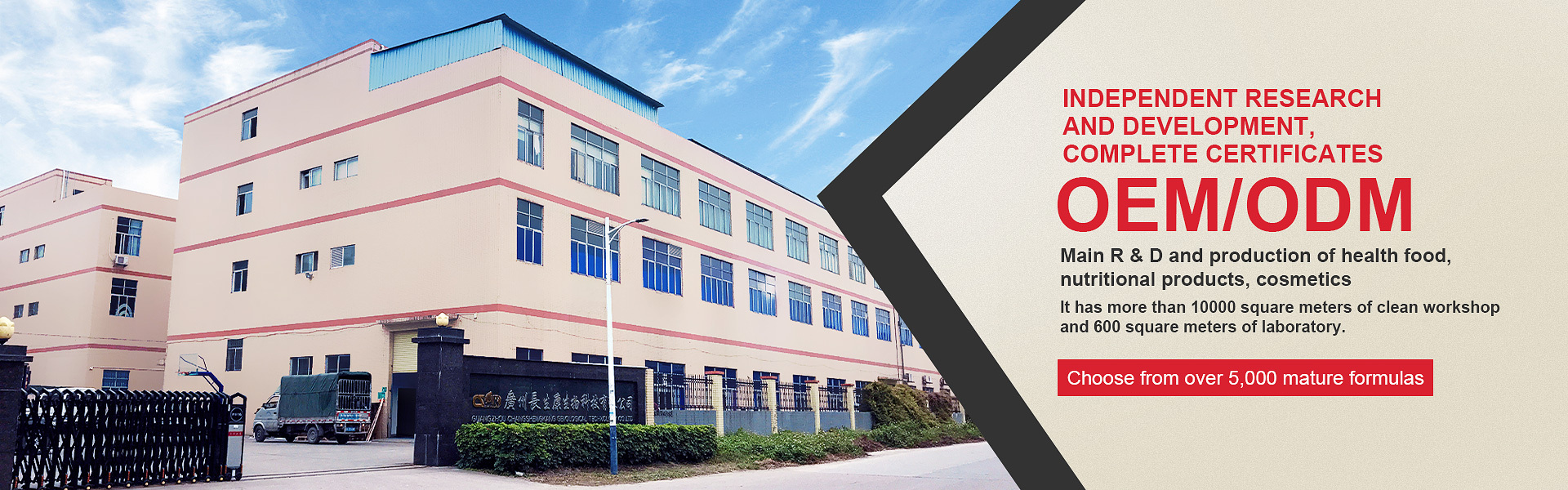
With 18 years of contract manufacturing experience, a Class 100,000 GMP cleanroom, and SGS testing support for our entire product line, we pledge to strictly safeguard all client formulas. We welcome on-site audits and provide full-process traceability. We invite major brands to visit us and discuss OEM/ODM customization partnerships.