
 Date: 2026-3-26 Click:233 times
In the health supplement contract manufacturing industry, there's a question that nearly every brand owner asks: “I want to develop a custom softgel product, but why does the factory tell me the minimum order quantity is 200,000 capsules? I just want to start with a few tens of thousands to test the market—is that not possible?”
This number—200,000 capsules—stands like an invisible barrier between startup brands and source manufacturers. Many clients misinterpret this as the factory “favoring the wealthy and shunning the poor” or “setting up barriers.” However, behind the scenes of soft capsule production lines, this figure is not arbitrarily set; rather, it is an industry benchmark determined by equipment characteristics, material wastage, GMP regulations, and cost-sharing logic.
As a source manufacturer with years of deep expertise in soft gel capsules, today we're taking an unprecedented look behind the scenes of our production line to reveal the business logic and technical realities behind the “300,000-capsule minimum order” requirement.
I. Production Line Setup Costs
Soft capsule production is not as simple as brewing a cup of coffee—you can't just turn it on and off at will. It is a highly precise, continuous process involving multiple stages, including gelatin dissolution, ingredient mixing, pellet extrusion, shaping, drying, pellet sorting, and packaging.
1. Equipment Preheating and Parameter Calibration
Before each production run, the factory must thoroughly clean and calibrate equipment such as the gelatin dissolution tank, pellet extruder, and drying drum. This is particularly true for the pellet press, which requires adjustments to the die gap, spray temperature, and shell thickness based on the formulation's viscosity. This process typically takes 2–4 hours, during which the gelatin, raw oil, and energy consumed are all considered “sunk costs.” If order volumes are too small, these fixed costs, when allocated per capsule, become extremely high, resulting in a unit cost far exceeding market acceptance levels.
2. Losses Due to Shell Instability
The core of a soft capsule lies in the “capsule shell.” During the initial startup of the tablet press, the thickness and uniformity of the shell require a period of dynamic equilibrium to reach a stable state. Capsules produced during this period are often discarded as rejects due to non-compliance with appearance or weight standards. Only when production enters a steady state does the yield rate increase. A production scale of 200,000 capsules is precisely designed to spread out these “startup period losses” and ensure the final product's cost remains competitive in the market.
II. The “Economic Minimum Package” for Molds and Materials
The customization of soft capsules is largely reflected in their shapes (such as fish, heart, or oval) and contents, which requires significant investment in physical assets.
1. Customization Costs for Rotating Molds
Soft capsules are formed by extrusion using a pair of steel rotating molds. Each specific capsule shape requires a dedicated set of molds. These molds involve a long manufacturing cycle and high precision requirements, with costs typically ranging from tens of thousands of RMB. This cost must be amortized across every capsule in an order. If only tens of thousands of capsules are produced, the mold cost alone would make the unit cost exorbitantly high; however, with a production volume of 200,000 capsules, the mold cost is diluted, allowing the price to return to a reasonable level.
2. Procurement Thresholds for Gelatin and Raw Materials
When we procure gelatin or base oils, upstream suppliers impose minimum order quantities (e.g., gelatin is typically purchased by the ton). If an order is too small, the factory cannot reduce raw material costs through bulk purchasing. Furthermore, due to insufficient purchase volume, the factory may be unable to secure stable batches of raw materials from upstream suppliers, leading to color variations or viscosity differences that compromise product quality consistency.
III. The “Minimum Sample Unit” in Quality Control
GMP production standards impose strict requirements on the definition of a batch. A single batch of products must be manufactured using the same raw materials and completed within the same production cycle to facilitate quality traceability.
1. Proportion of Testing Costs
Whether an order is for 10,000 or 1 million units, the pre-shipment testing process remains the same: it requires microbiological testing, heavy metal screening, content determination, disintegration time testing, and more. The costs for these laboratory tests are fixed. If the order volume is too small, the proportion of testing costs relative to total production costs becomes disproportionately high, which is uneconomical for both the buyer and the seller.
2. Requirements for Stability Studies
According to regulatory requirements, health supplements must undergo accelerated and long-term stability studies before market release. This requires retaining a sufficient number of samples for periodic testing. A production volume of 200,000 units ensures that enough samples are retained for testing without affecting normal shipments, thereby providing data support for the product's shelf-life quality.
IV. Production Efficiency: Frequent Product Changes Are the Greatest Waste
For a factory, the ideal scenario is “long-term, high-volume orders.” If a production line frequently switches between product types—producing fish oil today, Coenzyme Q10 tomorrow, and Ganoderma lucidum spore oil the day after—each changeover requires at least half a day for line clearance and cleaning.
During this downtime, equipment is idle, yet labor costs, facility depreciation, and utility expenses continue to accrue. Setting a 300,000-capsule threshold essentially screens out brands without a solid market strategy, thereby optimizing production scheduling. The efficiency gains achieved are ultimately passed on to the customer in the form of lower unit prices for finished products.
V. Recommendations for Brand Partners: How to Meet This Threshold?
Once the logic behind minimum order quantities is understood, brand partners actually have multiple strategies to launch projects without forcing the factory to deviate from standard procedures:
1. Select the factory's existing stock and customize packaging
Whenever possible, select the factory's existing bulk-produced soft gel capsules and standard packaging bottles. This eliminates the need for custom production and avoids minimum order quantity restrictions for packaging materials, allowing you to create your own branded products by customizing labels and outer boxes.
2. Phased Packaging
Based on the total annual order volume, sign a framework agreement to split the 200,000-capsule requirement into “one production run + phased packaging.” The factory is willing to offer price support based on the total volume.
Conclusion
200,000 capsules is not a cold, rigid threshold, but a rational cost benchmark.
Behind this figure lie dozens of tons of gelatin production, millions of yuan in equipment operation, and the dedication of every quality inspector to batch consistency. As a manufacturer, our goal is not to turn away small clients, but to help every brand obtain high-quality, reasonably priced, and compliant products through scaled production.
.png)
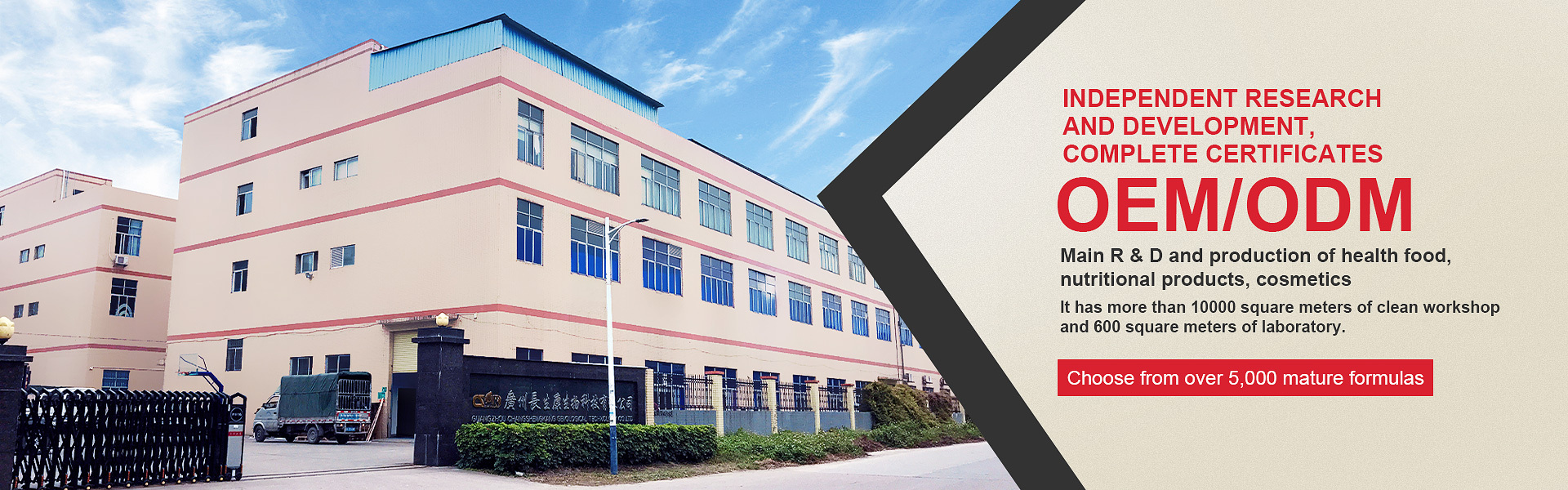
About Guangzhou Changshengkang Biotechnology Co., Ltd.
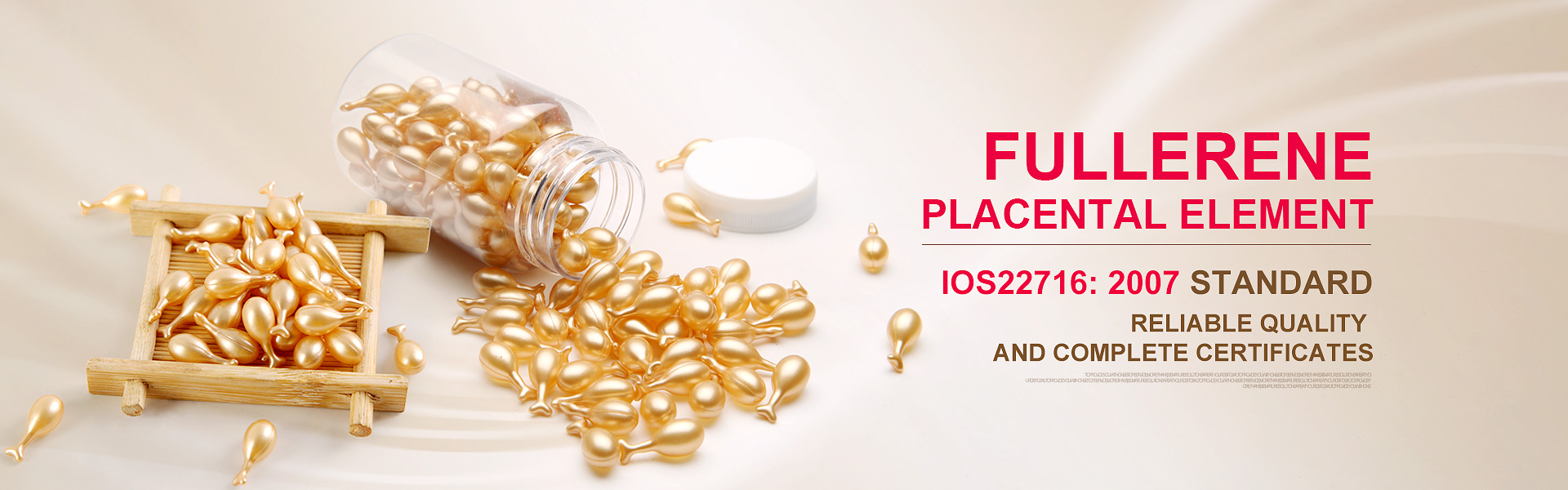
With 20 years of expertise in soft capsule OEM/ODM, we operate nine fully automated rotary tablet press production lines and can handle formulations for fish oil, DHA algae oil, Coenzyme Q10, Vitamin E, and various suspensions. We do more than just manufacture; we serve as your strategic advisor for your full range of soft capsule product lines. We welcome major brands to visit our facilities and discuss OEM/ODM customization partnerships.