

 Date: 2026-4-22 Click:200 times
Chinese health food going global is entering a golden era. With the global health industry heating up, export trade in health products is steadily growing, and more brands are setting their sights on overseas markets. However, the complexity of the export process – from factory qualifications and formula compliance to international logistics – often makes brands hesitate. Can it really be done – from formula confirmation to going live on an overseas platform – in just 30 days?
The answer is yes. The key lies in a mature and efficient "export OEM" collaboration system.
I. The Regulatory Foundation for 30 Days: Export Filing Comes First
For domestic health foods to be exported, there is no need to obtain a "Blue Hat" approval in China. Brands simply need to find a factory with full export qualifications, bypassing the lengthy registration and approval process required for domestic market launch. The core legal basis is Article 42 of the Administrative Measures for the Safety of Import and Export Food (GAC Decree No. 249): An export food production enterprise shall file with the customs office at its place of domicile.
According to Article 38 of the same regulation, export food production enterprises must ensure that their exported foods meet the standards of the importing country (region) or contract requirements. In other words, the core of compliance is not domestic approval but meeting the regulatory requirements of the target market. This is the institutional foundation for the 30-day fast export process.
II. Breakdown of the 30-Day Process: Four Stages in Parallel
The speed of 30 days hinges on "parallel operations" – export filing, raw material procurement, packaging customization, and production scheduling are all carried out simultaneously, not sequentially.
Stage 1: Needs Assessment & Compliance Pre-screening (1–3 days)
The brand provides product requirements (efficacy positioning, dosage form, size/packaging, target price). The factory matches or fine-tunes from an existing formula library. At this stage, dual compliance pre-screening begins: ensure formula ingredients meet domestic production licensing requirements while simultaneously checking banned ingredients and dosage limits in the target market. For example, for the US, ensure ingredients are not on the FDA prohibition list; for the EU, comply with EFSA regulatory standards.
Stage 2: Export Filing & R&D Sampling (3–10 days, concurrent with subsequent stages)
This is the key to "parallel" work. The factory submits an online application via the "China Export Food Production Enterprise Filing Management System." The customs authority decides whether to accept the application within 5 working days of receiving complete documents and then makes a final filing decision within 20 working days. During the application period, the R&D team simultaneously creates samples to confirm sensory indicators such as taste, color, and disintegration time, ensuring samples are produced with the same raw materials and processes as mass production.
Stage 3: Target Market Compliance Preparation (15–20 days, concurrent with production)
Exporting health foods requires not only domestic filing but also compliance with the importing country's regulations:
US Market: All companies that manufacture, package, or store dietary supplements must register their facility with the FDA. Overseas companies must appoint a US agent. They must also comply with 21 CFR 111 regarding Current Good Manufacturing Practice (CGMP), covering raw material control, production management, testing, and more.
EU Market: Requires EFSA approval. Oral health products must be accompanied by a batch test report and comply with local labeling regulations.
Other Markets: For example, TGA registration in Australia, compliance with food hygiene laws in Japan, etc.
The above registration processes proceed in parallel with production scheduling, adding no extra time to the cycle. The factory must prepare in advance documents such as product ingredient lists, production process descriptions, test reports, and label samples.
Stage 4: Production, Quality Control & Logistics (7–10 days)
Upon arrival, raw materials are inspected and accepted before entering processes such as batching, mixing, capsuling/tableting, and packaging. Finished products undergo full testing, adding target-market-specific tests for pesticide residues, allergens, contaminants, etc.
In terms of logistics, health products are considered sensitive goods and require cross-border dedicated lines capable of handling such items. For exports to the US, specialized sensitive goods channels typically take 7–12 working days. Air freight generally requires 7–10 working days. The factory can help connect with overseas warehouses for "dropshipping," reducing last-mile delivery to 3–5 days.
III. Three Critical Nodes for Success
Export Food Production Enterprise Filing: This is a prerequisite for export. Without a filing number, products cannot be legally shipped. Filing itself has no fee, is valid for 5 years, and is recommended to be completed in advance to avoid impacting order delivery.
Target Market Access Compliance Confirmation: Different countries have significantly different regulatory standards for health foods. Brands must clearly understand the target market's regulatory requirements before starting, including ingredient allowances, labeling norms, and limitations on health claims.
Compliant Transport Packaging Labeling: According to Article 46, export food production enterprises must mark the transport packaging with the manufacturer's filing number, product name, production batch number, and production date. Label design must also meet the target country's language and formatting requirements.
IV. Our Value: One-Stop Delivery, Eliminating Multi-Party Coordination
Under the traditional model, brands often have to coordinate separately with R&D, packaging, customs brokers, logistics providers, and others – inefficient and risky. We have broken down industry silos and integrated the entire chain: export filing assistance, target market compliance consulting, formula R&D, production quality control, and international logistics. Brands only need to provide their brand and product requirements; we handle the rest.
30 days, from formula to overseas launch. This is not just a slogan – it is a mature, proven export delivery system.
Quick FAQs
Q: Does the 30 days include export filing time?
A: Yes. Filing and production preparation proceed in parallel; the filing cycle takes about 5–25 working days and does not add extra time.
Q: Can all health products go through the 30-day fast track?
A: Provided that formula ingredients comply with domestic production licensing requirements and there are no special access restrictions in the target market (e.g., US NDI new dietary ingredients require a 75-day advance notification).
Q: Is 30 days the fastest possible?
A: The standard lead time is 30 days. If the brand already has export filing qualifications, expedited orders can be compressed to 20–25 days.
.jpg)
About Guangzhou Changshengkang Biotechnology Co., Ltd.
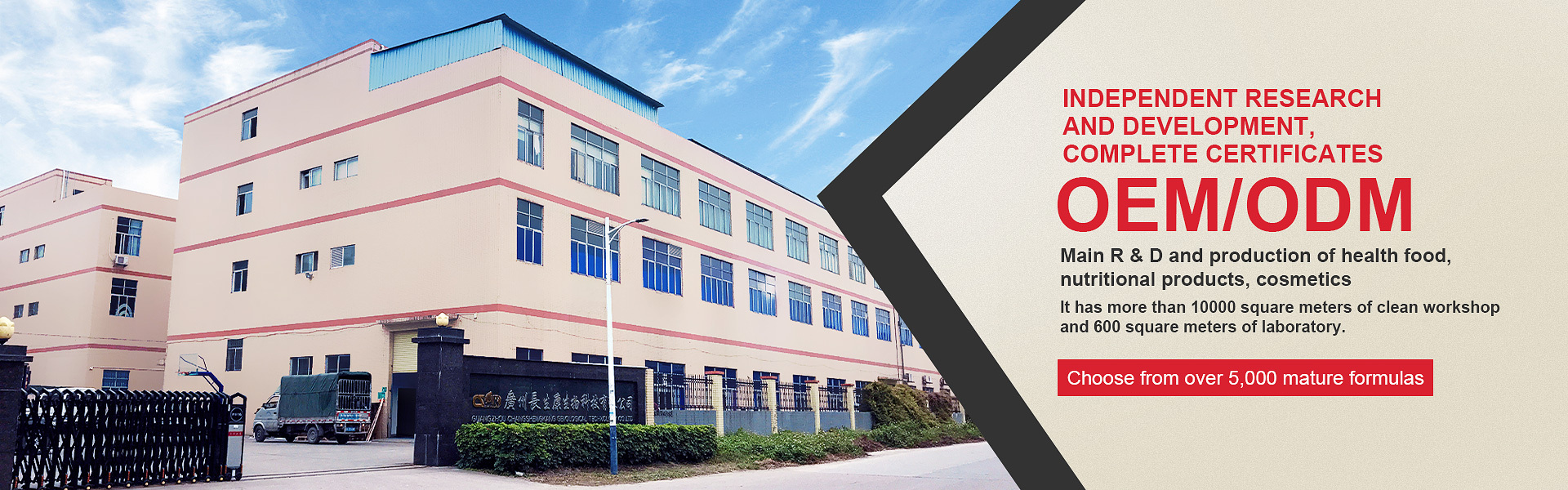
With 20 years of experience in health food R&D and OEM, a 100,000-grade GMP clean workshop, and customs export food production enterprise filing qualifications, we accept OEM/ODM orders for export to the US, Russia, the EU, Southeast Asia, Africa, the Middle East, and more. We provide full-chain services including export filing assistance, formula R&D, compliance production, and international logistics, with support for small-batch customization. Brands are welcome to visit our facility and explore global markets together.