

 Date: 2026-6-5 Click:853 times
Population aging is profoundly reshaping the global health supplement industry. According to data from the National Bureau of Statistics’ 2025 National 1% Population Sample Survey, as of November 2025, China’s population aged 60 and older had reached 321 million, accounting for 22.86% of the total population. Meanwhile, the global median age reached 31.1 years in 2026, marking a critical phase in global aging. In 2026, the global market for elderly care products is projected to reach approximately $31.5 billion, with dietary supplements emerging as the largest single product category, accounting for 36.1% of the market.
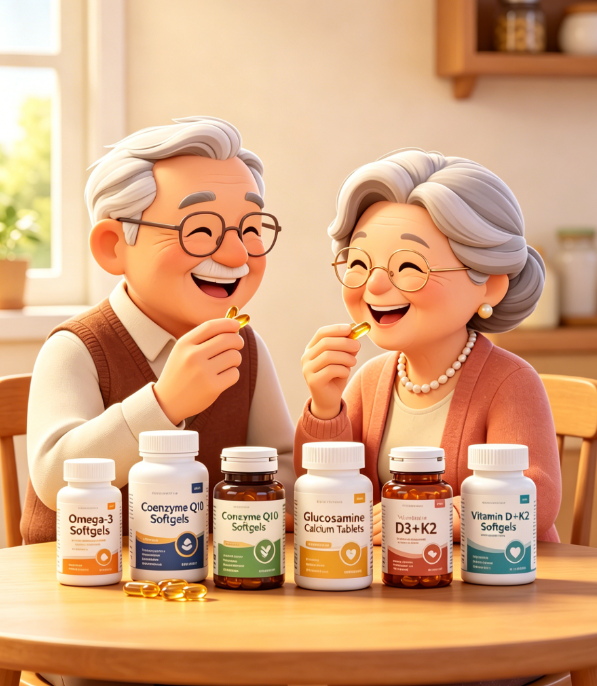
The demand for health supplements among middle-aged and elderly populations is shifting from basic nutritional supplementation toward functional, customized products focused on chronic health management. This article examines the latest market trends across three core segments: bone health, cardiovascular health, and blood glucose management.
I. Bone Health: The Most Fundamental “Upgraded Essential Need”
Osteoporosis is a common skeletal issue among middle-aged and elderly individuals, and targeted bone health supplements serve as a critical entry point for chronic disease management. According to Stratistics MRC data, the global bone health supplement market reached $28.3 billion in 2026 and is projected to reach $59.8 billion by 2034, with a compound annual growth rate (CAGR) of 9.8%. Current mainstream formulations have evolved from the traditional calcium-plus-vitamin D3 combination to complex formulas containing vitamin K2-MK7 (which directs precise calcium localization), magnesium (for bone matrix and muscle function), boron (for mineral metabolism), and collagen peptides. In terms of dosage forms, the market for bone health gummies is valued at approximately $5.03 billion in 2025 and is projected to reach $17.01 billion by 2034, with a CAGR of 14.5%. “Tasty and portable” has become a key differentiator in the competitive landscape.
II. Cardiovascular Health: The Largest Segment in Chronic Disease Management
Lipid and blood pressure management are the health areas of greatest concern among middle-aged and elderly populations. According to data from Fortune Business Insights, the global cardiovascular health supplement market reached $12.31 billion in 2025, is projected to reach $13.0 billion in 2026, and is expected to grow to $21.51 billion by 2034, with a CAGR of 6.5%. In terms of ingredient composition, the vitamins and minerals category is expected to dominate with a 42.23% share in 2026, while herbal extracts, omega-3 fatty acids, and coenzyme Q10 are also showing strong growth momentum. Among these, Coenzyme Q10, with its key antioxidant role in cellular energy metabolism, is achieving an annual growth rate of 7.0% to 13.0% and is becoming a popular category among the aging population and statin users.
In the Chinese market, the industry for health supplements targeting high blood pressure, high blood pressure, and high blood sugar is growing even more rapidly. According to industry reports, the market size for these supplements in China exceeded 86 billion yuan in 2025, with a compound annual growth rate (CAGR) of 12.3%, and is projected to reach approximately 97 billion yuan by 2026. Core ingredients such as fish oil, red yeast rice, coenzyme Q10, and nattokinase dominate the market. Among these, multi-ingredient formula products that combine synergistic effects—such as lowering cholesterol while protecting the liver, or reducing blood pressure while improving sleep—are emerging as a new focus in product R&D.
III. Blood Glucose Management: The Fastest-Growing Blue Ocean Segment
Maintaining stable blood glucose levels is an area of rapidly growing interest among middle-aged and elderly individuals, as well as those with metabolic sub-health conditions. According to data from Persistence Market Research, the global blood glucose management supplement market is projected to grow from $9.9 billion in 2025 to $15.4 billion in 2032, at a compound annual growth rate (CAGR) of 6.4%. According to the International Diabetes Federation, the global population with impaired glucose tolerance reaches 540 million, constituting a vast potential user base for blood glucose management supplements. Natural blood sugar-regulating ingredients such as L-arabinose, low-GI complex carbohydrates, and fig extract are rapidly being incorporated into formulations, becoming key raw material options for category innovation. Meanwhile, China’s blood sugar management supplement market is expanding at an annual growth rate of 8% to 12%. With over 400 million people in the prediabetes stage and a continuously rising willingness to consume such products, the market holds immense potential.
IV. Functional Customization: Flexible Solutions from Contract Manufacturers
Faced with the increasingly sophisticated chronic disease management needs of the middle-aged and elderly population, standardized single-product solutions are no longer sufficient to cover diverse scenarios. Brands are increasingly inclined to partner with source contract manufacturers possessing flexible manufacturing capabilities to achieve agile production with small batches and frequent runs. At the same time, personalized customization is leveraging technologies such as genetic testing and metabolomics to provide consumers with “tailored” precision health solutions, upgrading from traditional retail to a closed-loop “product + service” model.
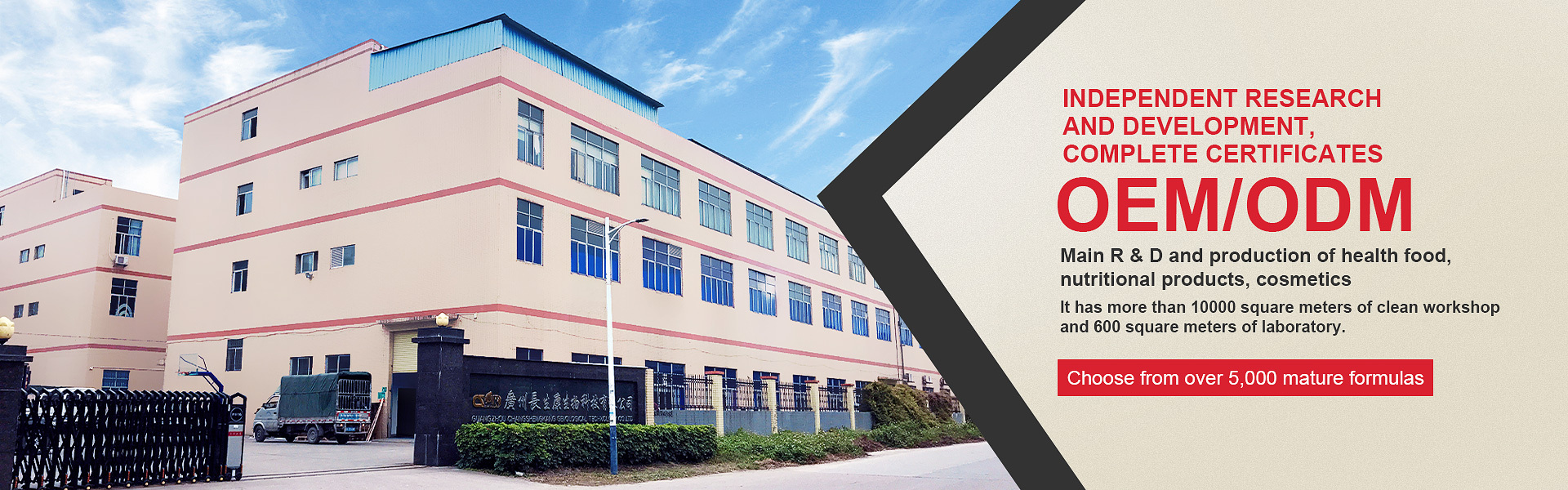
As a source contract manufacturer with 18 years of production experience, we specialize in OEM/ODM custom manufacturing services for four major dosage forms: soft capsules, hard capsules, tablets, and powders. We have accumulated mature process expertise in the R&D of compound formulations for chronic disease segments such as bone health, cardiovascular health, and blood glucose management. From raw material screening and formulation development to compliance testing and mass production, we offer one-stop solutions to help brand clients precisely target the new blue ocean of “upgraded needs” among middle-aged and elderly consumers.
Important Notice: Health supplements are not drugs and cannot replace medical treatment for diseases. Consumers should make informed choices based on their individual circumstances.