
 Date: 2026-10-28 Click:61 times
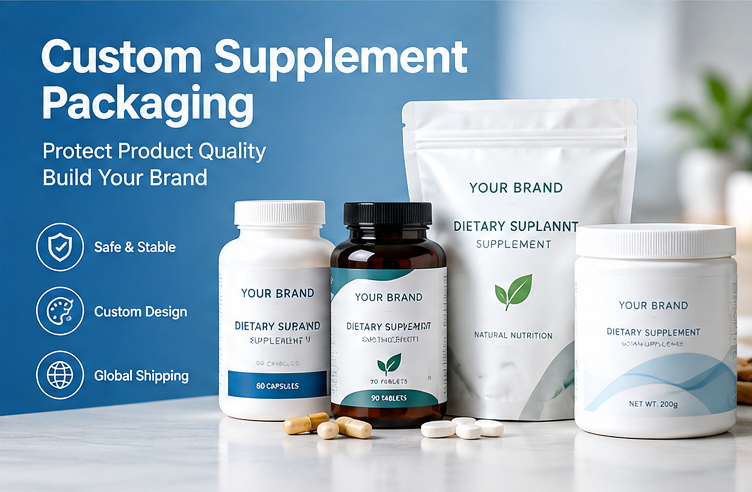
Packaging plays an important role in dietary supplement development. It influences brand presentation, consumer perception, product protection, labeling compliance, and transportation. For supplement brands and importers, choosing the right packaging solution is an essential part of successful contract manufacturing.
1. Match Packaging to the Dosage Form
Different dosage forms have different packaging requirements.
Softgels and hard capsules are commonly packed in bottles or blister packs, depending on capsule size, pack count, barrier properties, and transportation conditions. Tablets may use bottles, blisters, or other suitable formats. Powder supplements can be packed in flexible pouches, single-serving sachets, or containers, with moisture protection assessed according to the formula.
Packaging should be selected based on product characteristics, storage conditions, shipping distance, and destination-market requirements—not appearance alone.
2. Consider Packaging Materials and Product Stability
Some nutrients are sensitive to moisture, oxygen, or light. For these products, manufacturers and brands should evaluate moisture and oxygen barriers, light protection, and sealing performance under expected storage and transportation conditions.
Moisture protection is particularly important for many powder formulas. Oil-based products also require compatibility assessment between the contents and packaging materials. Where appropriate, stability studies can help determine suitable packaging structures and storage conditions.
Packaging materials should also meet applicable food-contact safety requirements in the target market.
3. Customize Labels and Brand Presentation
Brands can customize label colors, graphics, typography, bottles, and cartons to create a consistent visual identity across product lines.
Label layouts should allow sufficient space for required information, which may include product identity, ingredients, nutrition information, directions for use, warnings, and manufacturer details. Exact requirements depend on the product category and destination market.
Before printing, all artwork should be checked for text accuracy, ingredient names, numerical values, dimensions, and file specifications. Technical requirements such as converting fonts to outlines should be confirmed with the printing supplier to reduce production errors and rework.
4. Packaging Considerations for Export Orders
For export projects, buyers should confirm labeling requirements, packaging languages, container or pouch specifications, pack counts, carton dimensions, shipping protection, and final artwork versions before production.
If product registration or regulatory review is required, the relevant compliance assessment should ideally be completed before packaging artwork is finalized. This helps reduce the risk of costly revisions and delivery delays.
Buyers should also discuss minimum packaging quantities, sampling procedures, artwork approval, and lead times with the manufacturer.
Conclusion
An effective packaging solution balances brand identity, product stability, manufacturing efficiency, regulatory compliance, and cost.
With 18 years of supplement manufacturing experience, our factory provides customized packaging support for softgels, hard capsules, tablets, and powders. Whether you are launching a new supplement brand or expanding an existing product line, we can help evaluate practical manufacturing and packaging options based on your market and project requirements.